


Wireless charging technology is now widely adopted in devices such as smartphones, headphones, smartwatches, car chargers, and desktop chargers. It is important to note that the ability to charge does not guarantee safety, stability, or compatibility. To ensure seamless interoperability with various devices and reliable, safe charging performance, wireless charging products typically require Qi certification.

1、Definition of Qi Certification
The Qi certification is a globally unified wireless charging standard developed by the Wireless Power Consortium (WPC). It serves as a "common language" for wireless charging devices, ensuring interoperability across different brands and types of devices.
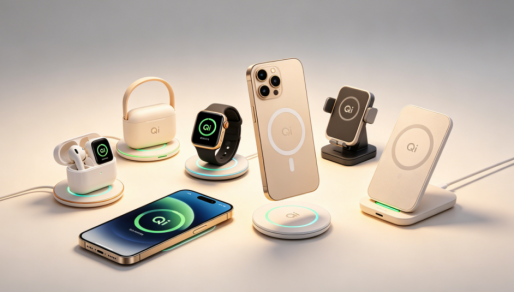
From smartwatches and TWS earphone charging cases to electric toothbrushes, desk lamps, car mounts, café tables, medical devices, and industrial barcode scanners—Qi standard covers all small electronic devices requiring wireless power. Mobile phones represent the largest and most typical application scenario.
1、Potential issues if Qi certification is not obtained
Wireless charging products without Qi certification may theoretically support charging functionality, but often exhibit the following shortcomings in practical use:
1. Poor charging stability: Issues such as charging interruptions, power fluctuations, or device error messages may occur;
2. Significant safety risks: Poor temperature control performance may adversely affect battery lifespan with prolonged use, posing potential thermal safety hazards;
3. Limited compatibility: Support is incomplete for most mainstream smartphones or headphones, and slow charging may only be available on a limited number of devices;
4. Market access barriers: Major e-commerce platforms, automotive equipment manufacturers, and overseas supermarkets typically require products to carry Qi certification.
Qi-certified products undergo rigorous testing and demonstrate superior reliability in charging stability, temperature control, foreign object detection, and device compatibility. The current mainstream versions of Qi 1.3 and above introduce a bidirectional authentication mechanism: chargers and devices mutually verify each other; unverified chargers may have their charging power restricted or be outright denied charging access by the device.
2、Car-based wireless charging imposes higher requirements on Qi certification standards.
The in-vehicle environment is more complex than that of a desktop setting, involving vibrations, temperature fluctuations, interference from metallic foreign objects, and stringent electromagnetic compatibility requirements for automotive electronic systems. Consequently, in-vehicle wireless charging products must meet higher standards for safety and reliability.
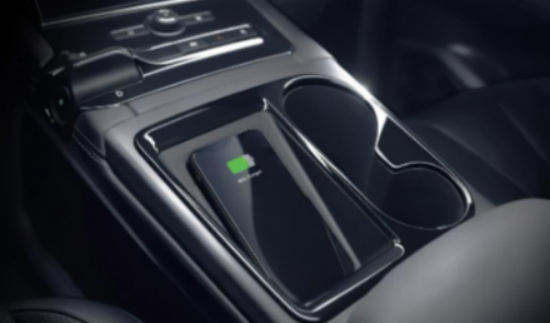
1. Overheat and Foreign Body Protection: Qi certification requires the inclusion of a Foreign Object Detection (FOD) function, which rapidly identifies and cuts off power when metal objects such as coins or keys enter the charging area.
2. Security Encryption: Fast charging at 15W or higher requires encrypted authentication to prevent malicious attacks;
3. Electromagnetic Compatibility: Rigorous testing ensures no interference with in-vehicle electronic devices such as GPS, radios, and keyless entry systems;
4. Environmental adaptability: Must withstand extreme temperature and vibration tests ranging from-40°C to 85°C.
Conclusion: Vehicle-mounted wireless charging products that fail Qi certification pose significant risks to safety and reliability.
1、Qi Certification Application Process
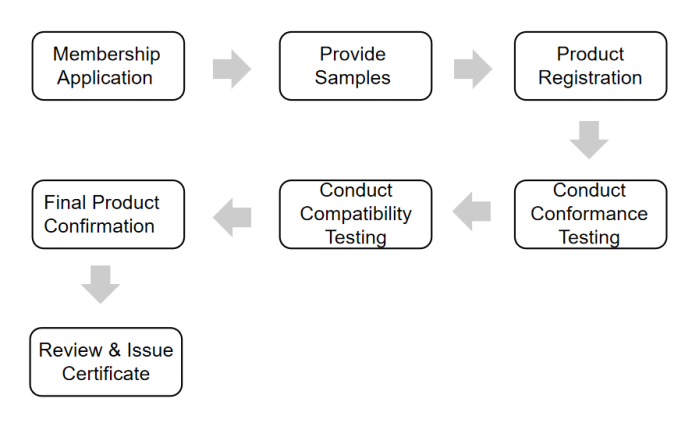
Qi certification serves as a critical requirement for wireless charging products to ensure safety, compatibility, and reliability. The certification application process is as follows:
If you're unsure whether your product requires Qi certification or would like more information, please feel free to contact the Zhongle Certification Team. We'll provide you with professional advice and customized certification solutions.
Tel: 13417442373(Wechat)
E-mail: finny.zhou@zhongletest.com
Teams:nancy.le@zhongletest.com